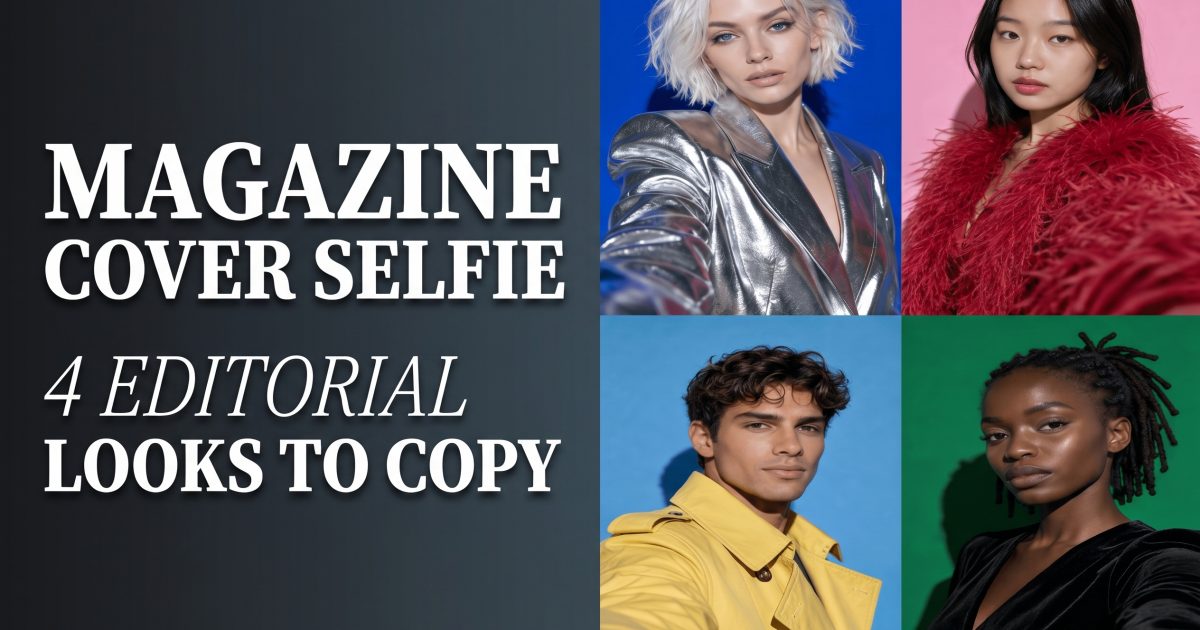
A magazine cover selfie is the photo trend for anyone bored of the plain front-camera shot. Think tight crop, direct eye contact, hard flash, and one bold color doing most of the work. It feels polished without looking like a formal studio portrait. Kling Image 4.0 arrived this week with stronger detail, more reliable text, and consistent image sets, which makes this look easier to test in a few directions instead of settling for one safe edit.
Why the magazine cover selfie works right now
Scroll culture rewards a face that reads in half a second. A clean close-up gives the eyes somewhere to land. A strong background gives the thumbnail a job. Then the clothes, shine, and shadows make the frame feel intentional.
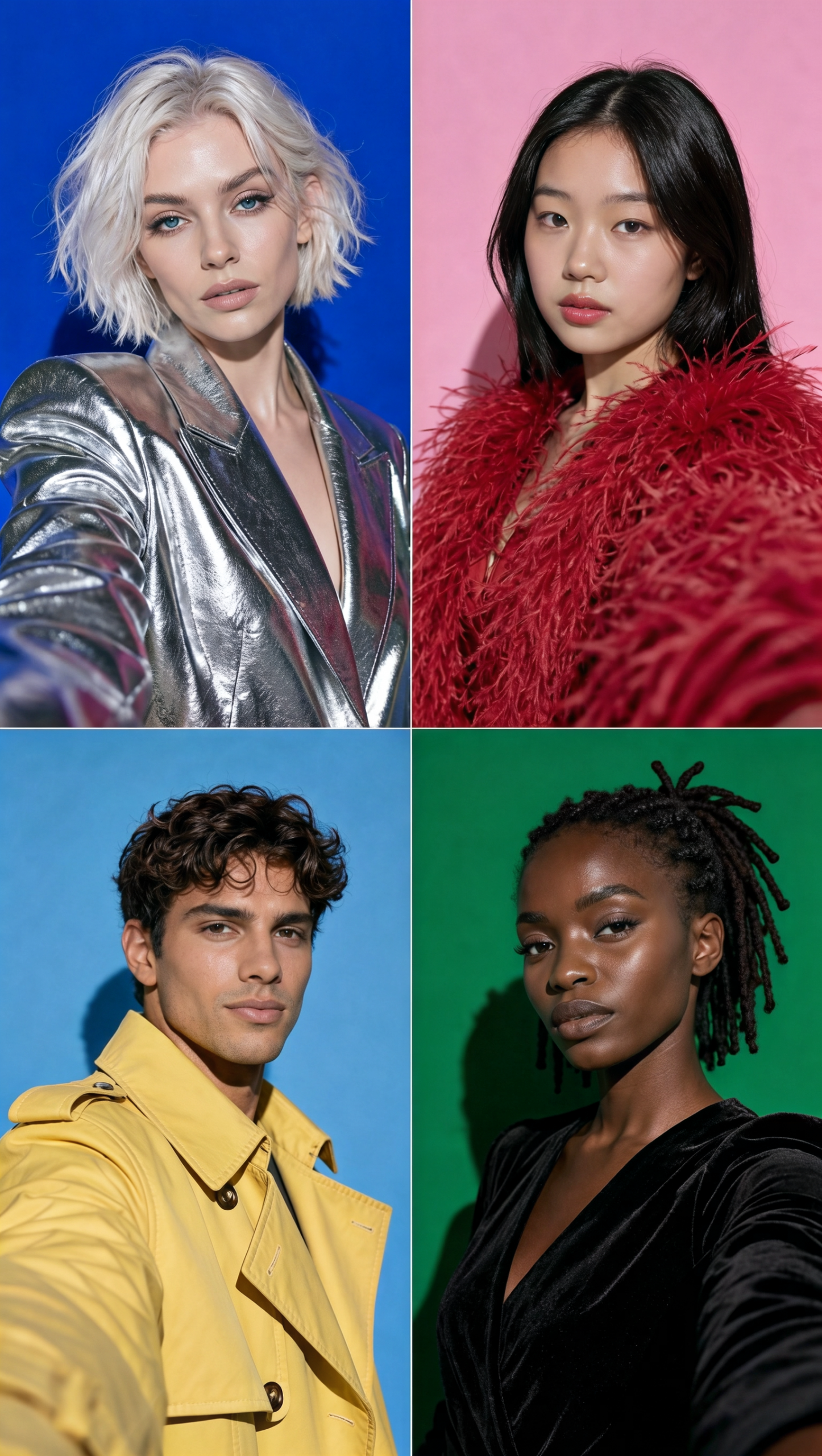
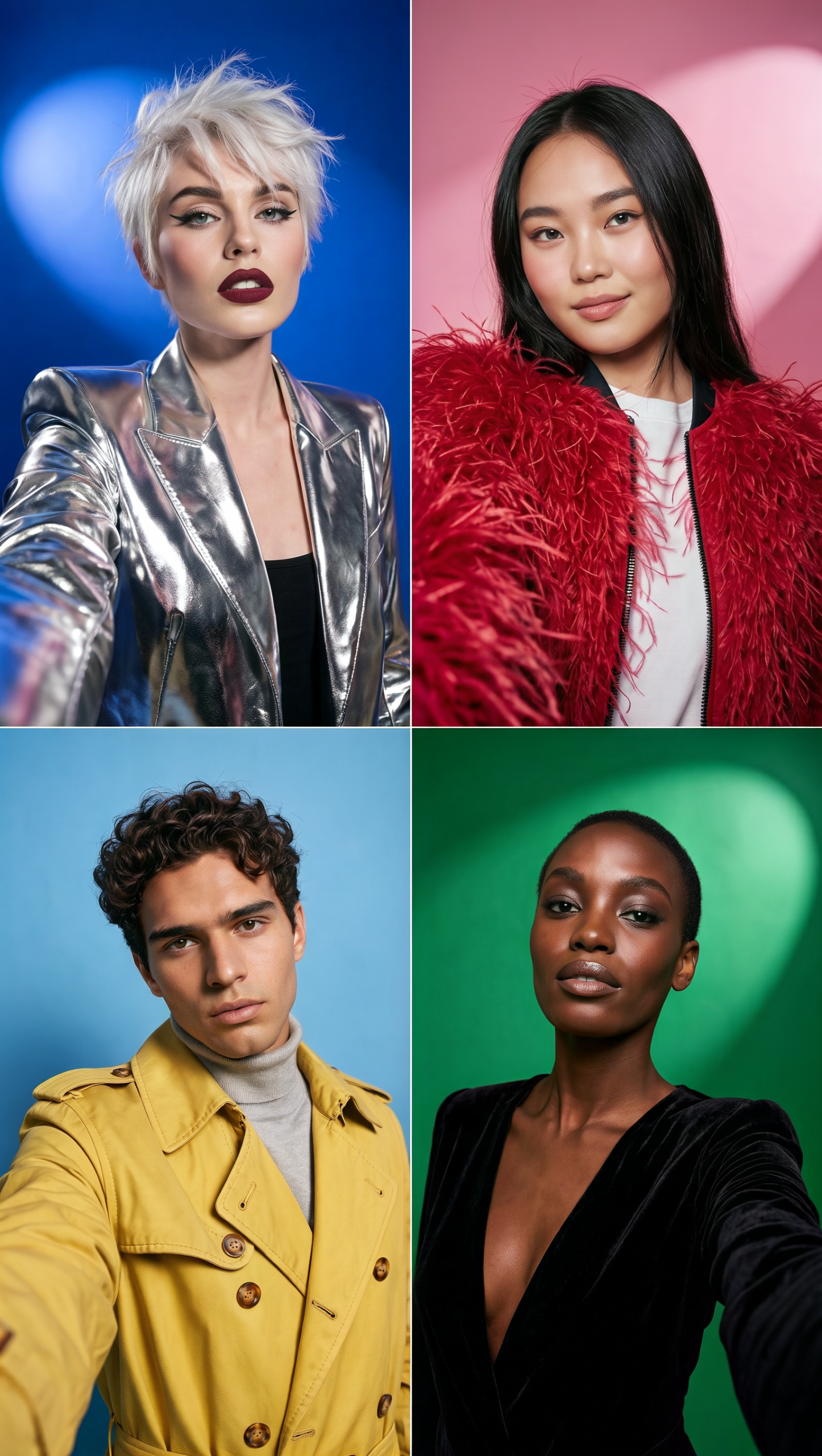
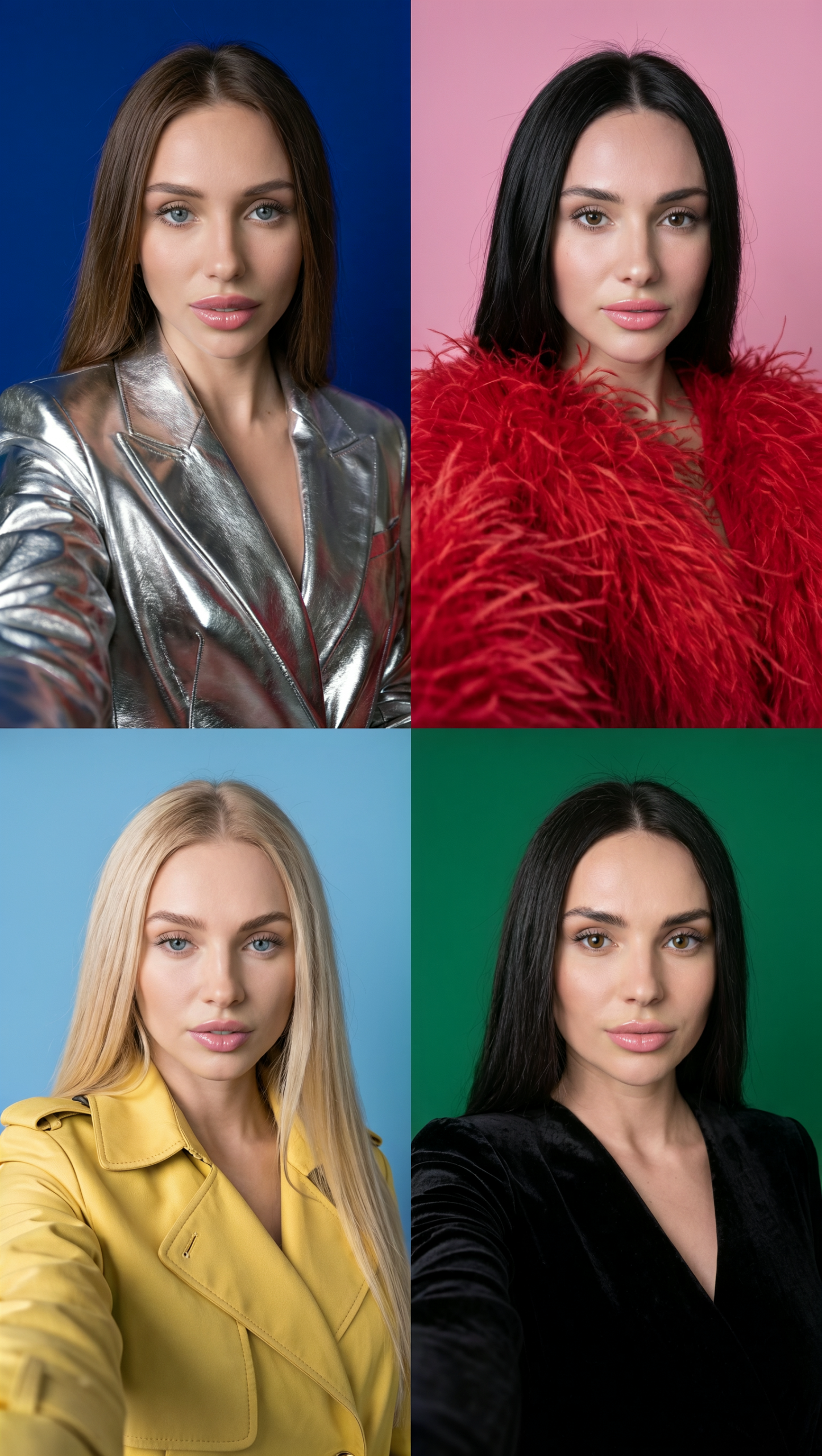
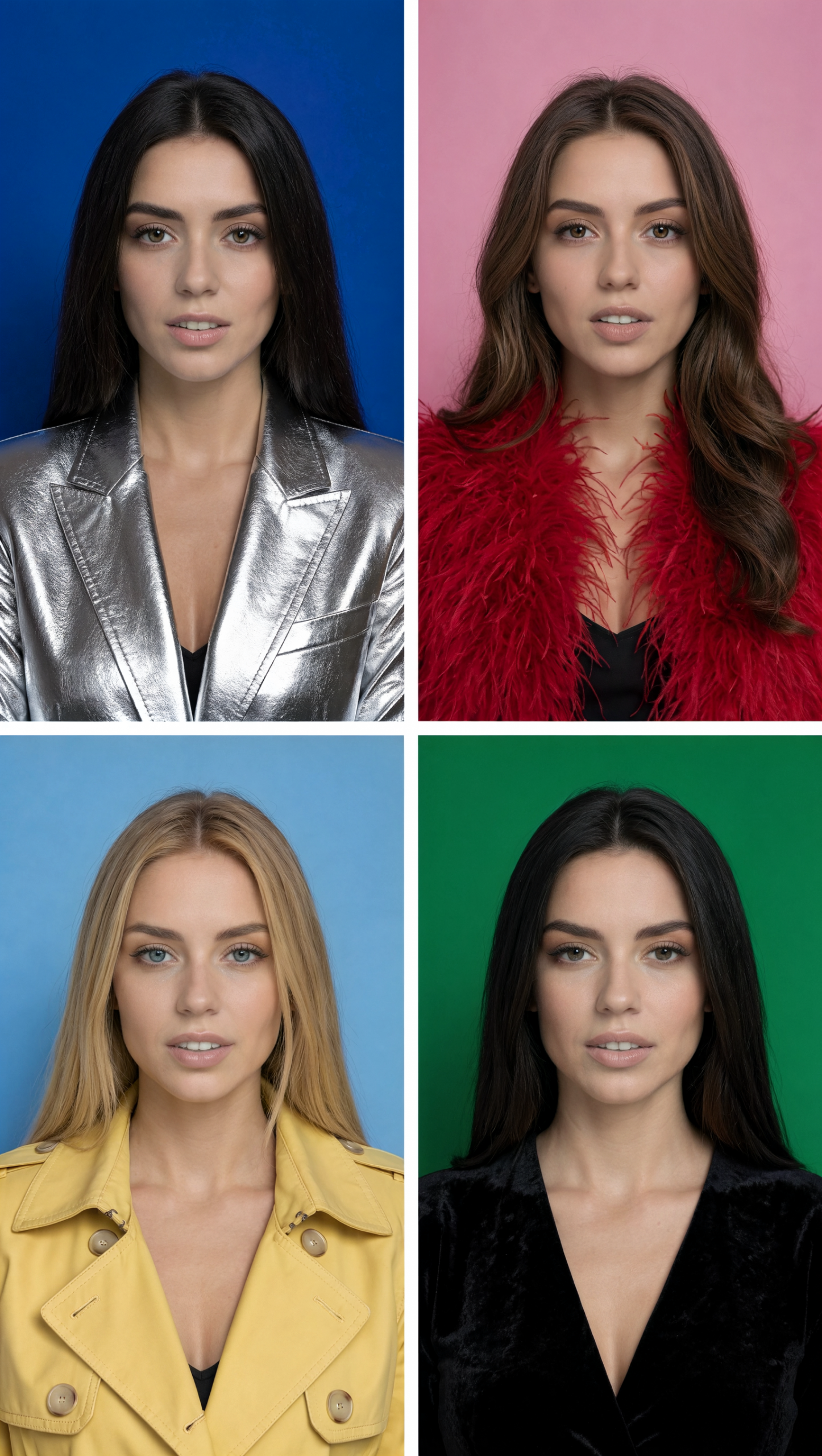
The trick is contrast. Pair a simple pose with something loud: chrome against blue, red feathers against pink, black velvet against green. Keep the expression relaxed. The image should look like somebody caught a good second, not like they spent an hour trying to look expensive.
This is also a useful trend for a carousel. Start with the hero portrait, then add a detail shot, a different color story, or a crop that feels more candid. Each slide has a shared mood, but none looks copied.
4 magazine cover selfie looks to copy
1. Chrome jacket and electric blue
Silver does the work of a beauty light. Put it beside a cobalt background and even a still pose feels active. A magazine cover selfie like this works best with bare shoulders or a sharp collar, dewy skin, and a straight-on gaze. Skip busy jewelry. The jacket already brings enough sparkle.
2. Cherry red with a soft pink wall
Red feather trim or a fuzzy jacket gives this trend some movement without needing a video. Use a pink background that is a shade lighter than the outfit. The result has the playful mood of a backstage snap after a fashion show. A neutral face keeps it from tipping into costume.
3. Butter yellow and sky blue
This is the bright daytime version. A yellow trench, lemon knit, or pale gold top looks fresh beside a blue background. Let one loose strand of hair cross the face. It adds the tiny flaw that keeps the image from feeling like an ad. This magazine cover selfie style suits profile photos, birthday posts, and a first slide that needs a little warmth.
4. Black velvet with an emerald set
For a late-night version, go dark on dark but change the texture. Velvet catches flash in soft patches, while an emerald wall keeps the image from disappearing into shadow. Keep the crop close. A little empty space above the head makes room for a caption when the photo becomes a Story cover or Reel thumbnail.
Make the trend feel like you
Start with one clear idea, not ten. Pick a color pair. Pick a fabric. Pick a mood. Then keep the pose plain. A chin tilt, a hand near the collar, or a direct look into the lens is enough. The editorial energy comes from the styling and light, not from a complicated gesture.
Hard flash is useful because it shows texture. Leave some shine on the skin. Let the fabric keep its creases. A face that looks too smooth loses the point of the trend. The newest Kling Image 4.0 release puts extra focus on skin, light, materials, and coherent sets, but the strongest choice still comes before any edit: use a photo where the expression already feels like you.
Make three versions before posting. One should be bright, one should be darker, and one should crop a little closer than feels comfortable. The close crop often wins on a phone screen. If text is added later, keep it small and let the face stay in charge.
A magazine cover selfie is not about pretending to be on a cover. It is about borrowing the confidence of one. Pick the color that makes the photo feel loudest, keep the pose easy, and give the camera one good second to work with.
Create this effect in Bloom AI
Recreate these effects on your own photos and videos — free to start.