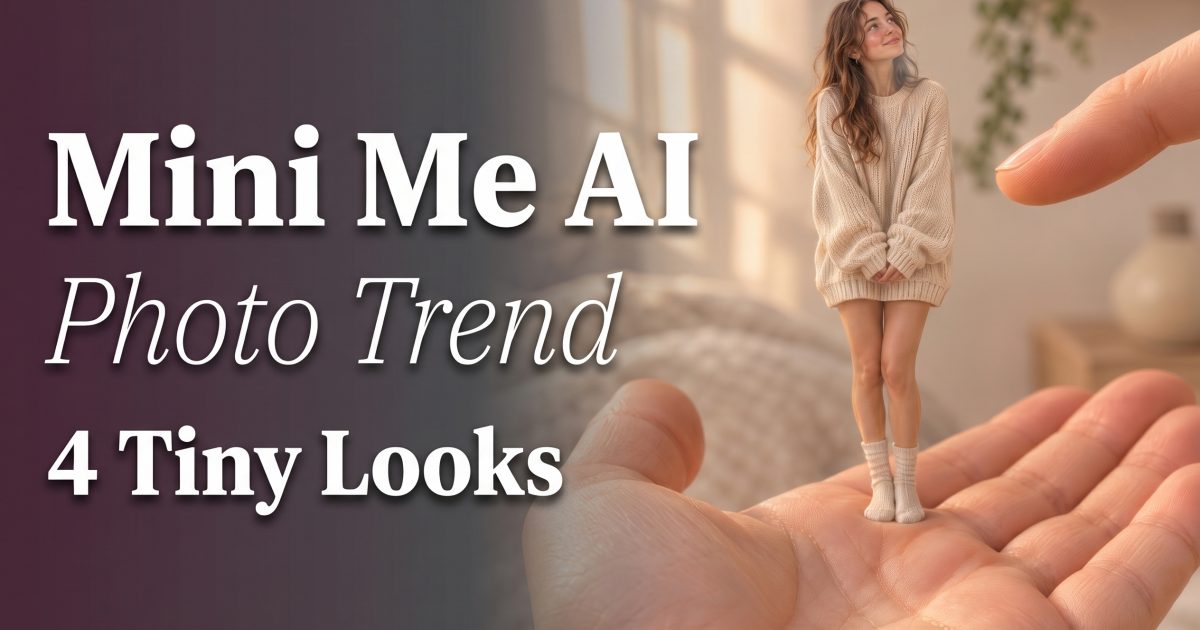
The mini me AI photo trend takes one familiar idea and makes it instantly scrollable: shrink the subject, put them in a giant everyday setting, and let the scale do the rest. A palm, coffee mug, open book, or record becomes a whole tiny world. The result feels personal, playful, and more surprising than a standard selfie.
Miniature edits have been circulating across Reels, TikTok, and Instagram because the setup reads in one second. Viewers see a person, then notice the oversized prop and stop for a closer look. The strongest versions keep one clear subject, one obvious scale clue, and lighting that makes the tiny figure feel like it belongs there.
Why the Mini Me AI photo works
The hook is simple: something ordinary becomes enormous. That flip in scale is easy to understand on a phone screen, even before a caption explains it. A miniature figure in a palm feels sweet. A tiny version of a creator on a coffee mug feels like a little scene from their day. A person tucked inside a book hints at a story.
The format also gives creators room to keep the same effect while changing the mood. Use soft morning light for a calm coffee shot. Switch to a dark room and a glowing turntable for something music-led. The figure stays tiny, but the world around them can match an outfit, a hobby, a season, or a color palette.
Detailed image prompts help when a scene needs several objects to stay in the right place. OpenAI image generation explains why precise instructions improve object relationships and text handling. For this trend, that control matters most around hands, props, contact shadows, and the tiny figure’s pose.
4 Mini Me AI photo looks to try
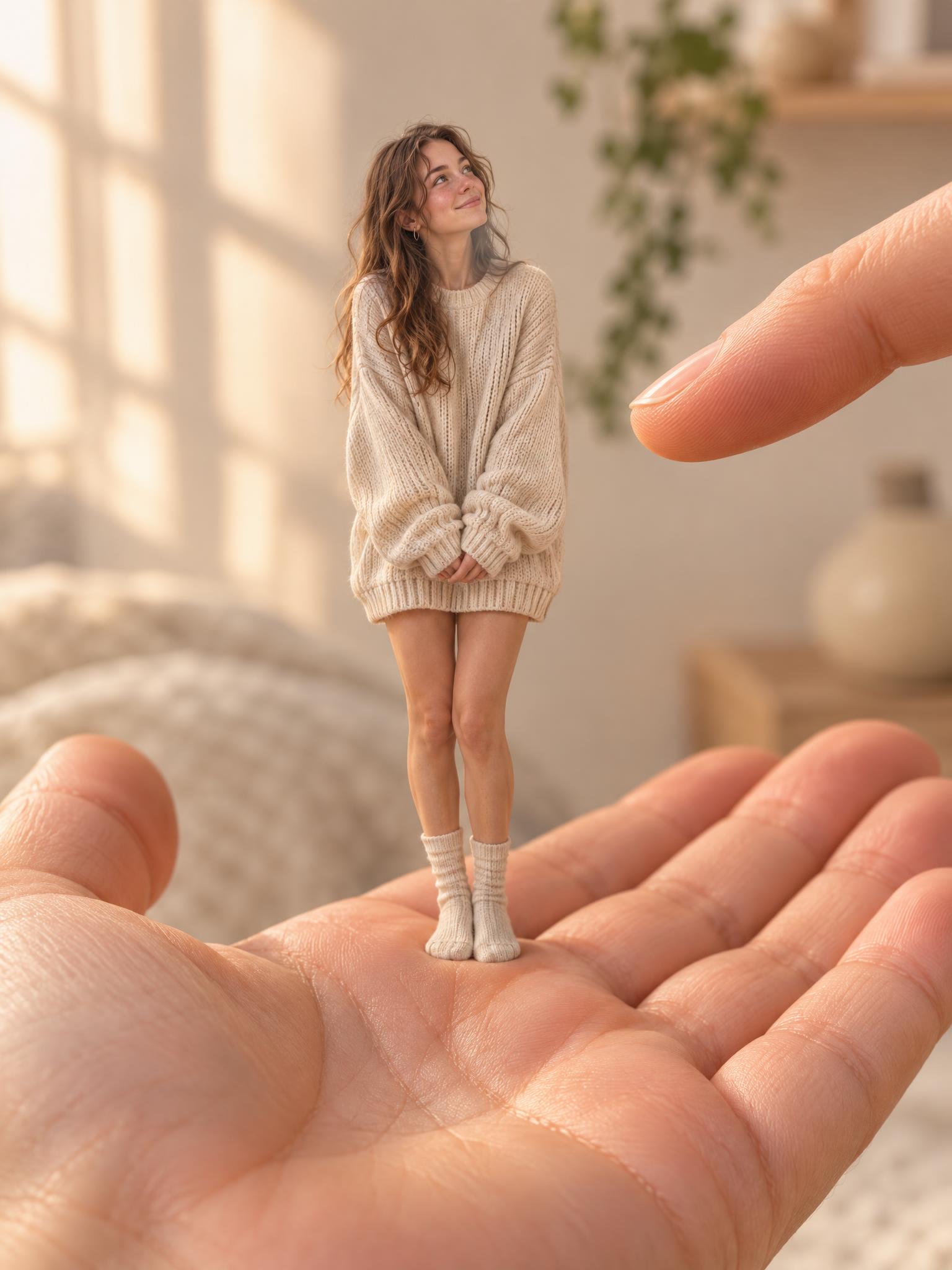
1. The palm-size hello
Start with the cleanest version of the effect: one tiny person standing in an open hand. Keep the background plain and the light soft. A nearby fingertip can add scale without crowding the frame. This works especially well for a first slide in a carousel because the idea lands immediately.
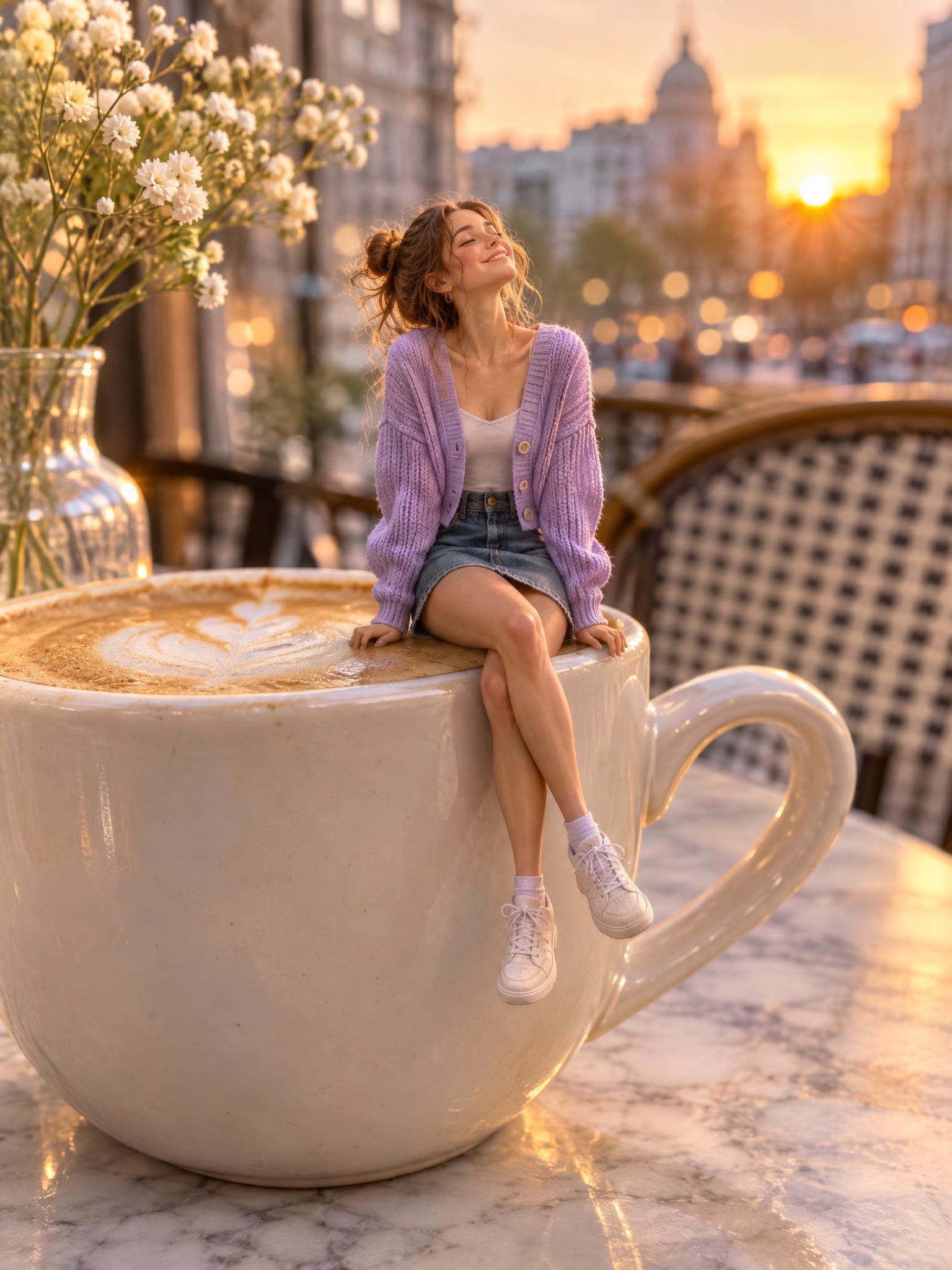
2. The coffee-rim moment
A giant mug gives the picture a warm, everyday setting. Place the tiny figure on the rim or against the cup, then keep the table styling quiet. Morning light, a simple knit outfit, and a real contact shadow keep the image from reading like a toy render. It is an easy fit for lifestyle, study, and cafe content.
3. The book-world scene
An open hardback turns the Mini Me format into a tiny story. Let the pages form the setting, then give the subject one prop that suggests a character, such as a bag, coat, or camera. Warm library tones make the shot feel more cinematic. Leave any page text out of focus so accidental lettering does not become the focal point.

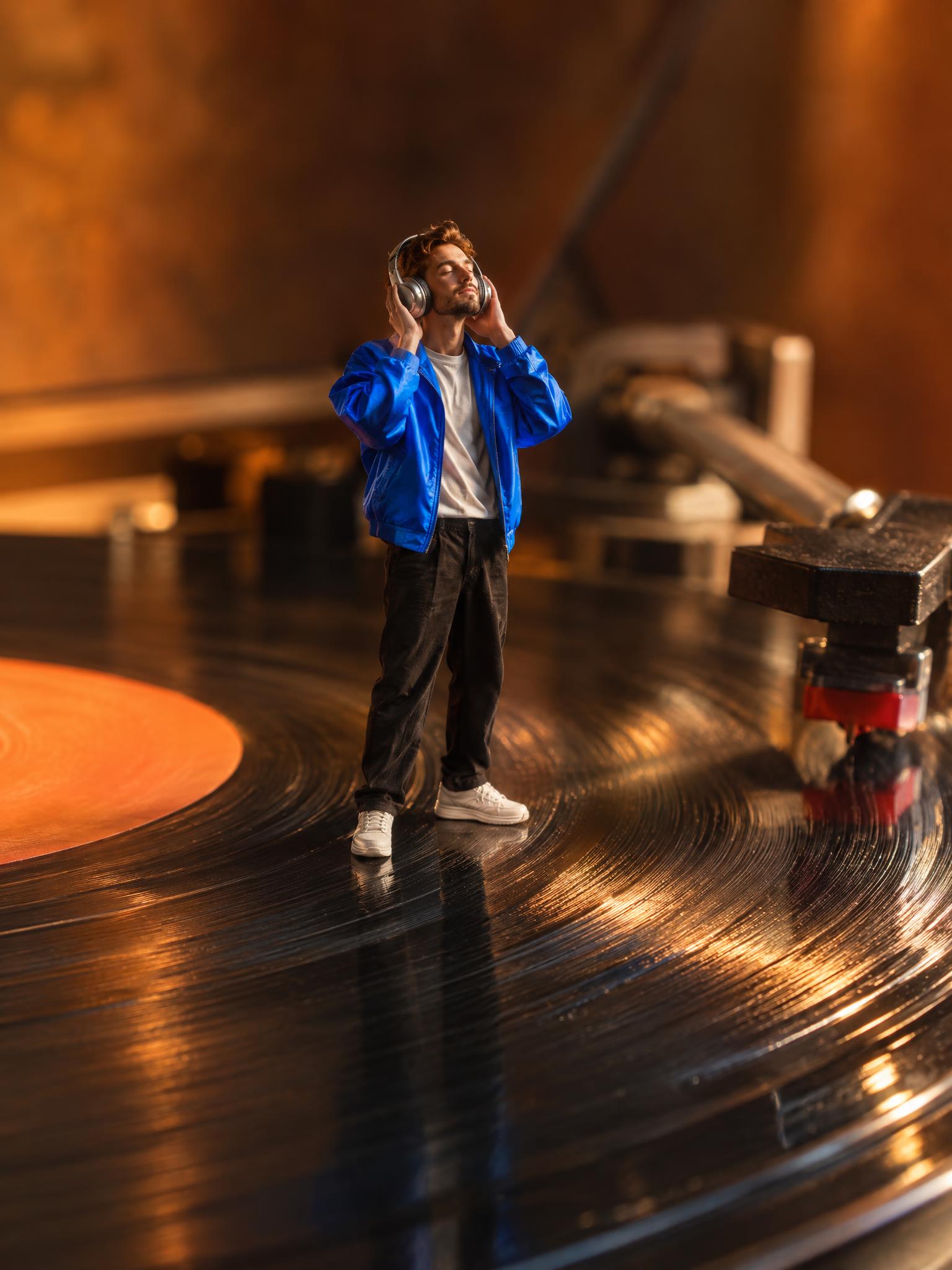
4. The record-player stage
Use a vinyl record for a bolder, music-first version. The circular shape frames the small figure, while headphones or a jacket give the scene a clear personality. Blue light, grain, and a single warm lamp can make it feel like a late-night listening session. The scale looks strongest when the record grooves remain visible.
How to make the scale feel real
Choose one oversized prop, not five. A hand, mug, book, record, compact, or suitcase gives the eye a stable reference point. Add one contact shadow where the tiny person meets the surface. That small detail does more than a busy background.
Keep the subject’s face clear. The Mini Me effect only feels personal when the figure has a believable expression and a readable outfit. A front-facing or three-quarter portrait works better than a distant pose. Make sure the prompt asks for macro photography, shallow depth of field, and realistic materials. Those cues help the scene feel photographed rather than pasted together.
For more ideas around the tiny-person format, this Mini Me in your palm trend guide shows why the palm setup is such a reliable starting point. The still-image version needs the same three ingredients: a clear subject, a giant scale clue, and one simple mood.
How to post a Mini Me AI photo
Use the finished image as the first frame, then follow it with a close crop or a quick screen recording of the effect. A short caption works best: name the setting and invite a choice. Try coffee mug, open book, or record player? The question gives people an easy reason to comment.
Skip cluttered captions and too many hashtags. This is a visual joke first. Let the image carry it. A consistent color palette across a four-slide carousel makes the format feel like a mini series rather than random experiments.
Create this effect in Bloom AI
Recreate these effects on your own photos and videos – free to start.